

Properties
What is it?
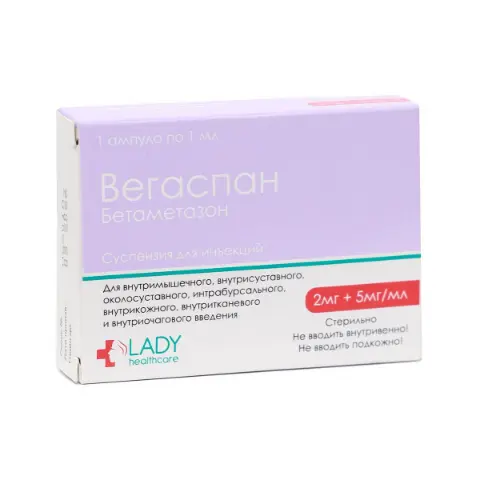
Vegaspan Trade name: Vegaspan Active substance (INN): Betamethasone Dosage form: Injectable suspension Composition: One ampoule contains: Active ingredients: Betamethasone sodium phosphate (calculated on 100% dry matter) 2.63 mg (equivalent to 2.0 mg betamethasone), Betamethasone dipropionate (calculated on 100% dry matter) 6.43 mg (equivalent to 5.0 mg betamethasone) Excipients: Methylparahydroxybenzoate (Nipagin, E218), Propyl parahydroxybenzoate (Nipazol, E216), Benzyl alcohol, Sodium chloride, Disodium phosphate dihydrate, Disodium edetate (Trilon B), Sodium carboxymethylcellulose (Sodium cellulose glycolate), Polysorbate 80, Polyethylene glycol 4000, Hydrochloric acid, Water for injection. Description: A clear, colorless or pale yellow, slightly viscous liquid containing easily resuspendable white or almost white particles, free from foreign inclusions. Upon shaking, a white or yellowish stable suspension is formed. See blog: Vegaspan - a preparation for the treatment of inflammatory and allergic diseases Pharmacotherapeutic group: Hormonal preparations of systemic action, excluding sex hormones and insulins. Corticosteroids for systemic use. Corticosteroids for systemic use, simple. Glucocorticoids. Betamethasone Pharmacological properties Pharmacodynamics Mechanism of action Vegaspan is a mixture of soluble and sparingly soluble betamethasone esters with potent anti-inflammatory, antirheumatic, and anti-allergic effects, used for the treatment of diseases sensitive to corticosteroids. Rapid therapeutic effect is provided by the soluble betamethasone sodium phosphate ester, which is rapidly absorbed after injection. Prolonged action is achieved due to betamethasone dipropionate, which is sparingly soluble and slowly absorbed, thus controlling symptoms for a longer period. Small crystals of betamethasone dipropionate allow the use of fine needles (up to 26 gauge) for intradermal and intralesional administration. Betamethasone has a potent glucocorticoid effect and minimal mineralocorticoid activity. Glucocorticoids penetrate beyond the cell membrane and form complexes with specific cytoplasmic receptors. These complexes then reach the cell nucleus, bind to DNA (chromatin), and stimulate mRNA transcription and subsequent synthesis of various enzymes, which explains the effect of systemic use. Glucocorticoids not only significantly affect the inflammatory process and immune response but also affect carbohydrate, protein, and lipid metabolism. They also affect the cardiovascular system, skeletal muscles, and central nervous system. Effect on the inflammatory process and immune response Glucocorticoids have anti-inflammatory, immunosuppressive, and anti-allergic properties. These properties lead to the following therapeutic effects: Reduction in the number of immunoactive cells near the focus of inflammation; Reduction of vasodilation; Stabilization of lysosomal membranes; Inhibition of phagocytosis; Reduction in the production of prostaglandins and related compounds. The anti-inflammatory effect is approximately 25 times more intense than that of hydrocortisone and 8-10 times more intense than that of prednisolone (at equivalent doses). Effect on carbohydrate and protein metabolism Glucocorticoids have a catabolic effect on proteins. Released amino acids are converted to glucose and glycogen during gluconeogenesis in the liver. Glucose uptake in peripheral tissues is reduced, which can lead to hyperglycemia and glucosuria, especially in patients at risk of developing diabetes. Effect on lipid metabolism Glucocorticoids have a lipolytic effect, primarily manifested in the limbs. Glucocorticoids also have a lipogenic effect, most pronounced in the chest, neck, and head area. All this leads to fat redistribution. The maximum pharmacological activity of glucocorticoids is observed not at the peak of plasma concentration, but after it, thus, the action of glucocorticoids is primarily due to the influence on enzyme activity. Pharmacokinetics Absorption Prolonged activity is achieved due to betamethasone dipropionate, which is practically insoluble, forming a depot, and thus absorption is slower and the period of symptom relief is extended. Biotransformation Betamethasone is metabolized in the liver. Betamethasone sodium phosphate is readily soluble in water and is metabolized in the body to betamethasone, a biologically active steroid. Betamethasone is mainly bound to albumin. In patients with liver disease, betamethasone clearance is slowed. Elimination Betamethasone is excreted by the kidneys. After oral or parenteral administration, the half-life of betamethasone is ≥300, and the biological half-life is 36-54 hours. A combination of betamethasone dipropionate/betamethasone sodium phosphate was administered intramuscularly to six adult patients with tritium-labeled betamethasone suspension: two received 5 mg of labeled betamethasone dipropionate, two received 1.66 mg of labeled betamethasone sodium phosphate, and two received a combination of 5 mg of lithium-labeled betamethasone dipropionate + 2 mg of unlabeled betamethasone sodium phosphate. In this study, intramuscularly administered betamethasone sodium phosphate was rapidly absorbed and immediately hydrolyzed, reaching maximum plasma concentration after 60 minutes. Betamethasone sodium phosphate was almost completely excreted on the first day of administration; after two days, a small amount of radioactive substance was excreted. Approximately 80% of the radioactive substance was found in the urine. On the other hand, betamethasone dipropionate was absorbed very slowly, metabolized gradually, and partially excreted after more than 10 days. However, most of the radioactive substance was excreted after 7-8 days. Similarly, when the combination was administered, approximately 40% of the radioactivity was excreted over 10 days, most of which was excreted on the seventh day. Indications for use Musculoskeletal system and soft tissues: Rheumatoid arthritis, osteoarthritis, bursitis, ankylosing spondylitis, epicondylitis, radiculitis, coccydynia (tailbone pain), radiculitis, lumbago, acute gouty arthritis, wry neck, ganglion cyst, exostosis (bone-cartilage outgrowth), and fasciitis. Allergic diseases: Chronic bronchial asthma (including complex therapy of asthmatic status), hay fever, angioneurotic edema, severe allergic bronchitis, contact dermatitis, atopic dermatitis, seasonal or perennial allergic rhinitis, drug reactions, serum sickness, and reactions caused by drugs or insect bites. Dermatological diseases: Atopic dermatitis (nummular eczema), neurodermatitis (lichen simplex chronicus), contact dermatitis, severe solar dermatitis, urticaria, hypertrophic lichen planus, diabetic lipodystrophy, alopecia areata, discoid lupus erythematosus, psoriasis, keloid scars, dermatitis herpetiformis, and cystic acne. Collagenoses: Systemic lupus erythematosus, scleroderma, dermatomyositis, and polyarteritis nodosa. Neoplastic diseases: As palliative treatment for leukemia and lymphomas in adults; acute leukemia in children. Other conditions: Adrenogenital syndrome, ulcerative colitis, Crohn's disease, sprue, pediatric diseases (subdural bursitis, stiff big toe, hallux varus), conditions requiring subconjunctival injections, corticosteroid-dependent blood disorders, nephritis, and nephrotic syndrome. Primary or secondary adrenal insufficiency (with mandatory simultaneous administration of mineralocorticoids). Method of administration and dosage The dosage regimen and method of administration are determined individually, depending on the indication, severity of the disease, and the patient's response to treatment. Vegaspan is recommended for: 1) Intramuscular injections for diseases that respond to systemic corticosteroid action; 2) Direct injections into affected soft tissues as indicated; 3) Intra-articular and periarticular injections for arthritis; 4) Intratissue injections for various dermatological diseases; 5) Local injections for certain inflammatory and cystic diseases of the foot. Shake before administration. Dosage The dose should be minimal, and the duration of use as short as possible. The dose should be selected until a satisfactory clinical response is achieved. If a satisfactory clinical response is not achieved after a certain period, Vegaspan should be discontinued with gradual dose reduction and other therapy should be initiated. After achieving the therapeutic effect, the maintenance dose is selected by gradually reducing the dose administered at certain intervals until the minimum dose that provides an adequate clinical effect is reached. Method of administration Vegaspan must not be administered intravenously or subcutaneously. During systemic therapy, the initial dose of Vegaspan is 1-2 ml in most cases. Administration is repeated as needed, depending on the patient's condition. Administration is carried out by deep intramuscular (IM) injection into the gluteal region. Doses and frequency of administration are selected individually, taking into account the severity of the patient's condition and therapeutic response: - In severe conditions (lupus erythematosus and asthmatic status) requiring emergency measures, the initial dose of the preparation may be 2 ml; - For dermatological diseases, 1 ml of the preparation is usually sufficient, and its administration may be repeated depending on the therapeutic response; - For respiratory diseases, the action of Vegaspan begins within a few hours after intramuscular administration. In bronchial asthma, hay fever, allergic bronchitis, and allergic rhinitis, significant improvement in condition is achieved after administration of 1-2 ml of the preparation; - For acute and chronic bursitis, the initial dose for intramuscular injection is 1-2 ml of the preparation. If necessary, the preparation is administered repeatedly. Simultaneous use of local anesthetics is rarely necessary for local administration. When administered simultaneously with local anesthetics, Vegaspan can be mixed in a syringe (not in the vial) with a 1% or 2% solution of procaine hydrochloride or lidocaine, using dosage forms that do not contain parabens. Similar local anesthetics can also be used. Anesthetics containing methylparaben, propylparaben, phenol, and similar substances are not allowed. When using anesthetics in combination with Vegaspan, the required dose of the preparation is first drawn from the vial into the syringe, then the required amount of local anesthetic is drawn from the ampoule into the same syringe and shaken for a short period. In acute bursitis (subdeltoid, subacromial, olecranon, and prepatellar), administration of 1-2 ml of Vegaspan into the synovial sac relieves pain and fully restores mobility within a few hours. As soon as acute symptoms are relieved, chronic bursitis can be treated with low doses of Vegaspan. In acute conditions such as tenosynovitis, tendinitis, and peritendinitis, administration of Vegaspan should improve the symptoms of the disease. In chronic forms of these conditions, repeated injections may be necessary depending on the patient's condition. After intra-articular administration of 0.5-2 ml of Vegaspan, pain and stiffness caused by rheumatoid arthritis and osteoarthritis can be relieved within two to four hours. In both conditions, the duration of symptom relief varies greatly, often for four weeks or more. Intra-articular administration of Vegaspan is well tolerated by articular and periarticular tissues. Recommended doses of the preparation for administration into large joints (knee, hip, shoulder) are 1-2 ml; for medium-sized joints (elbow, wrist, ankle) - 0.5-1 ml; for small joints (foot, hand, finger) – 0.25-0.5 ml. Dermatological conditions may respond to intralesional administration of Vegaspan. Some lesions that do not respond to direct treatment may be related to the weak systemic effect of the preparation. For some skin diseases, intradermal injection of the preparation directly into the focus of the lesion is effective, with a dose of 0.2 ml/cm². The preparation is injected at equal distances around the lesion using a tuberculin syringe and a 26 G needle. The total dose of the preparation administered at all injection sites within 1 week should not exceed 1 ml. In certain conditions, such as stiff big toe, hallux varus, and acute gouty arthritis, relief is felt quickly. For most injections, the use of a tuberculin syringe and a 25 G needle is recommended. Recommended single doses of Vegaspan (once a week): - For hard corns - 0.25 ml (usually 2 injections in succession); - For spurs - 0.5 ml; - For limited mobility of the big toe - 0.5 ml; - For synovial cyst - 0.25 to 0.5 ml; for tenosynovitis - 0.5 ml; - For acute gouty arthritis - 0.5 to 1 ml. After achieving the therapeutic effect, the maintenance dose is selected by gradually reducing the initial dose at certain intervals until the minimum effective dose is reached. Stressful situations affecting the patient (not related to the disease) may require an increase in the dose of Vegaspan. After prolonged therapy, the drug should be discontinued by gradually reducing the dose. In children during the growth period, corticosteroids should be used only when absolutely indicated and under the extremely careful supervision of a physician. Side effects Classification of the frequency of occurrence of undesirable side effects: Very common (> 1/10); Common (> 1/100 to < 1/10); Uncommon (> 1/1000 to < 1/100); Rare (> 1/10000 to < 1/1000); Very rare (< 1/10000), Frequency unknown (cannot be determined from available data). Common (≥1/100, <1/10) - Muscle weakness, muscle mass loss, osteoporosis, growth retardation in children - atrophy of skin and subcutaneous tissue - Headache, euphoria, mood swings, insomnia - Menstrual cycle disorders (including irregular menstruation), onset of Cushing's symptoms, fetal intrauterine development or growth retardation in children, secondary adrenocortical and pituitary immunological tolerance (especially during trauma, surgery, illness, stress), manifestation of latent diabetes mellitus, need for insulin or oral antidiabetic agents - Sodium retention, potassium deficiency, fluid retention - Suppression of reaction to skin tests, masking of infection symptoms and activation of latent infection, reduced resistance to infections (including mycobacteria of tuberculosis, fungal infections, and viruses). Uncommon (≥1/1000, <1/100) - Joint instability (after repeated injections) - Hyperpigmentation, hypopigmentation, skin thinning, petechiae and ecchymoses, facial erythema, increased sweating, allergic dermatitis, urticaria, angioneurotic edema, decreased skin test reactivity, impaired wound healing. - Skin Cushingoid changes with altered fat distribution, acne, hirsutism, and purpura - Increased intracranial pressure with papilledema (usually after completion of treatment), seizures, dizziness, arterial hypertension - Posterior subcapsular cataracts, increased intraocular pressure, glaucoma - Hypokalemic alkalosis. Rare (≥1/10000, <1/1000) - Corticosteroid myopathy, worsening of myasthenia gravis symptoms, compression fractures of the spine, aseptic necrosis of the femoral or humeral head, pathological fractures of tubular bones, tendon rupture, arthropathies (similar to Charcot's disease). - Hiccups, peptic ulcer disease with risk of perforation and bleeding, pancreatitis, abdominal distension, ulcerative esophagitis - Decreased glucose tolerance - Heart failure in patients with heart disease - Exophthalmos, blurred vision, blindness associated with injection into lesions on the face or head - Negative nitrogen balance (due to protein catabolism) - Severe depression with psychiatric disorders, personality changes - Anaphylactic, hypersensitivity, hypotensive, or shock-like reaction to administration of the preparation - Exacerbation with redness and swelling after injection (after intra-articular injection), sterile abscess. Frequency unknown - Blurred vision. Side reactions Parenteral administration of corticosteroids Undesirable side effects, as with the use of other glucocorticosteroids, depend on the dose of the preparation and the duration of its use. These reactions are usually reversible and can be reduced by dose reduction. Due to low blood levels, systemic side effects are rarely observed with local use of glucocorticosteroids, but with increasing dose and frequency of use, the risk of hypercorticism increases (with fluid and sodium retention, instability of diabetes mellitus, and arterial hypertension, etc.). Depending on the injection site, there is a risk of developing local infection: arthritis, local muscle atrophy, subcutaneous and skin atrophy, risk of tendon rupture (during injection into the tendon), premature onset of acute microcrystalline arthritis (for microcrystalline suspension), local calcifications, local and general allergic reactions, aseptic abscesses, post-injection inflammatory hyperemia (after intra-articular injection), and neurogenic arthropathies similar to Charcot's disease. Repeated injections into the joint may increase the risk of joint destruction. With local application to the head and face, isolated cases of serious visual impairment, including blindness, have been reported, as well as hyper- or hypopigmentation. Contraindications - Hypersensitivity to betamethasone, other corticosteroids, or any excipient - Systemic mycoses - Local and generalized developing infections, including viral ones (hepatitis, herpes, chickenpox, shingles) or suspicion thereof. - Blood clotting disorders, continuous anticoagulant therapy - The preparation should not be administered intramuscularly in idiopathic or thrombocytopenic purpura - Premature infants, newborns, and children under 3 years of age - Psychotic conditions not amenable to drug control - Vaccination with live vaccines. Drug interactions Combinations not recommended for use Preparations that cause "pirouette" type ventricular tachycardia: Astemizole, bepridil, intravenous erythromycin, halofantrine, pentamidine, sparfloxacin, sultopride, terfenadine, vincamine. In case of hypokalemia, drugs that do not cause paroxysmal tachycardia should be used. CYP3A4 inhibitors: Concomitant use with CYP3A inhibitors (e.g., ketoconazole, itraconazole, clarithromycin, ritonavir), including preparations containing cobicistat, is expected to increase corticosteroid levels and thus increase the risk of systemic side effects. During concomitant use, it is necessary to assess the risk of corticosteroid side effects. In case of using this combination, careful monitoring of patients is necessary for early detection of possible systemic side effects of corticosteroids. Combinations requiring precautions during use Acetylsalicylic acid (ASA), salicylates: During corticosteroid therapy, the elimination of salicylates by corticosteroids increases, and their blood levels decrease. After their withdrawal, the risk of salicylate overdose may occur. During concomitant use and after discontinuation of corticosteroid treatment, the dose of salicylates needs to be adjusted. Due to hypoprothrombinemia, combination of ASA with corticosteroids should be prescribed with caution. Antiarrhythmic drugs causing "torsades de pointes": Amiodarone, bretylium, disopyramide, quinidine, sotalol. Concomitant risk factors include hypokalemia, bradycardia, and existing QT interval prolongation. It is necessary to prevent the occurrence of hypokalemia, correct it if necessary; control the QT interval. In case of paroxysmal tachycardia, antiarrhythmic drugs should not be used (may increase electrosystolic activity). Digitalis: Concomitant use of glucocorticosteroids and cardiac glycosides in case of hypokalemia increases the risk of developing arrhythmias or digitalis intoxication. Corticosteroids can increase potassium excretion. For all patients receiving any combination of these drugs, careful monitoring of blood electrolyte levels, especially potassium, and ECG if necessary, is required. Oral anticoagulants: Concomitant use of corticosteroids and coumarin anticoagulants can enhance or reduce the effect on blood clotting, which may require dose adjustment. At high doses or prolonged treatment (more than 10 days), corticosteroids are characterized by an increased risk of bleeding (due to fragility of the mucous membrane of the gastrointestinal tract). If this combination is used, increased patient monitoring is necessary during and after corticosteroid therapy, with controls on the 8th and every 15th day thereafter. Parenteral heparins: At high doses or prolonged treatment (more than 10 days), heparin can increase the risk of bleeding, which is characteristic of corticosteroid therapy (due to fragility of the mucous membrane of the gastrointestinal tract). The administration of this combination should be justified, and increased patient monitoring is also necessary. Risk of gastrointestinal bleeding (GIT): Combined use of glucocorticosteroids with non-steroidal anti-inflammatory drugs (NSAIDs) or alcohol may increase the incidence or intensity of erosive and ulcerative lesions of the gastrointestinal tract. Other hypokalemic agents: The risk of hypokalemia may increase due to the cumulative effect of their simultaneous use or in combination with diuretics, laxatives, amphotericin B (for intravenous administration). It is necessary to monitor serum potassium levels and correct them if necessary, especially during therapy with digitalis preparations. In case of paroxysmal tachycardia, antiarrhythmic drugs should not be administered (may increase electrosystolic activity). CYP3A4 enzyme inducers: Carbamazepine, phenobarbital, phenytoin, primidone, rifabutin, rifampicin, aminoglutethimide, and ephedrine can enhance liver metabolism and, as a result, reduce plasma corticosteroid levels and their effectiveness. The results are particularly important in Addison's disease and after organ transplantation. In such cases, clinical and biological monitoring and dose adjustment of corticosteroids are necessary after the use of the combination and withdrawal of the enzyme inducer. Concurrent use of glucocorticosteroids and estrogens may require dose adjustment of the preparation (due to the risk of overdose). Insulin, metformin, sulfonylurea derivatives: Blood sugar may increase, sometimes with ketosis (due to reduced carbohydrate tolerance associated with corticosteroids). The patient should be warned about the need for increased self-monitoring of blood and urine, especially at the beginning of treatment. Dose adjustment of antidiabetic agents may be necessary during and after discontinuation of corticosteroid treatment. Isoniazid (described for prednisolone): Due to enhanced metabolism of isoniazid in the liver and reduced metabolism of glucocorticosteroids, a decrease in plasma isoniazid levels has been observed. Clinical and biological monitoring is recommended. Somatotropin: Glucocorticosteroids can suppress the response to somatotropin. Quetiapine: Concomitant use with quetiapine may enhance quetiapine metabolism, and depending on the clinical response, an increase in quetiapine dose may be necessary. Tretinoin: Tretinoin metabolism may be enhanced, and its blood levels may decrease. Vecuronium: Corticosteroids can antagonize the effects of neuromuscular blockers such as vecuronium. Fluoroquinolones: Concomitant use of corticosteroids and fluoroquinolones may increase the risk of tendon rupture. Corticosteroids may affect the nitroblue tetrazolium test for bacterial infection and cause false-negative results. Combinations under study Antihypertensive agents: Due to water and sodium retention by corticosteroids, a decrease in their antihypertensive effect has been noted. Interferon alpha: Risk of suppressing interferon activity. Live attenuated vaccines: Risk of generalized disease, possibly with a fatal outcome. This risk increases in patients weakened by the underlying disease. If necessary, the use of an inactivated vaccine is recommended if available. Oral contraceptives: Concurrent treatment with estrogens requires monitoring for potential enhancement of corticosteroid effects. Local use: With normal use for local administration, the risk of interaction with other drugs containing glucocorticosteroids is not high; these risks should be considered with multiple injections (in several places) or repeated injections over a short period. Special instructions Vegaspan must not be administered intravenously or subcutaneously. Strict adherence to aseptic techniques is mandatory when using the preparation. Vegaspan contains two active substances - betamethasone derivatives, one of which - betamethasone sodium phosphate, rapidly enters the systemic circulation. When prescribing Vegaspan, the possible systemic effect of the rapidly soluble fraction of the preparation should be taken into account. Athletes should be aware that the active substance in the preparation may cause positive results in doping control tests. In case of weakening or exacerbation of the pathological process, individual patient response to therapy, exposure of the patient to emotional or physical stress, serious infection, surgery, or trauma, dose adjustment of the preparation may be necessary. Complications of glucocorticosteroid therapy depend on the dose and duration of therapy; the benefit/risk ratio should be assessed individually for each patient. Treatment for tuberculosis: In active tuberculosis, the preparation can be prescribed only in cases of fulminant or disseminated tuberculosis with adequate antitubercular therapy. For patients with latent tuberculosis or a positive tuberculin reaction, a decision on prophylactic antitubercular therapy should be made before starting treatment with Vegaspan. It should be considered that rifampicin enhances corticosteroid metabolism, and dose adjustment of corticosteroids may be necessary. When using the preparation, it should be borne in mind that corticosteroids can mask signs of infectious diseases and reduce the body's resistance, so patients (especially children) should avoid contact with patients with chickenpox or measles. Corticosteroid therapy can contribute to the development of various infectious complications caused, in particular, by bacteria, fungal infections, and parasites. The risk of severe helminthiasis significantly increases. Before starting hormonal therapy, all individuals who have visited endemic areas (tropics, subtropics, Southern Europe) should be examined for parasitic infestations and undergo regular antihelminthic treatment. The preparation should be prescribed with caution for patients at high risk of infection (e.g., patients on hemodialysis) or with dental prostheses. Corticosteroid therapy is not contraindicated in gastrointestinal ulcers if it is part of the treatment regimen. In case of a history of ulcers, corticosteroid therapy can be prescribed under clinical supervision and, if necessary, after gastroscopy. The use of corticosteroids requires special attention in the elderly and in cases of ulcerative colitis (risk of perforation), diverticulitis, active or latent gastric and/or intestinal ulcers or recently created intestinal anastomoses, renal failure, arterial hypertension, heart failure, predisposition to thromboembolism or thrombophlebitis, difficult-to-treat epilepsy, growth retardation, Itsenko-Cushing's syndrome. Corticosteroids cannot be prescribed for infections with certain viruses (hepatitis, herpes, chickenpox, shingles). Patients receiving immunosuppressive doses of corticosteroids are advised to avoid exposure to chickenpox or measles and to consult a doctor if infected. This is especially important when children are being treated. Unvaccinated patients receiving systemic corticosteroids or who have received them within the last 3 months should receive passive immunization with varicella-zoster immune globulin within 10 days of exposure. If chickenpox is diagnosed, urgent specialized medical attention is required. In such cases, corticosteroid administration should not be discontinued, and dose increase may even be necessary. In case of measles infection, prophylaxis with intramuscular administration of normal immunoglobulin may be necessary. Mental disorders: Mental disorders (especially in patients with emotional instability or predisposition to psychotic reactions) may occur against the background of corticosteroid drug use. Patients and/or their caregivers should be warned that potentially severe psychiatric side effects may occur with systemic steroid use. Symptoms usually appear within a few days or weeks of starting treatment. The risk may be higher at high doses/systemic exposure, but the dose level does not allow prediction of the onset, type, severity, or duration of reactions. Most reactions are reversible after dose reduction or drug withdrawal, but specific treatment may be necessary. If significant psychiatric symptoms appear, especially if there is a depressive mood or suicidal thoughts, patients/guardians should be advised to seek medical attention. Special caution is required when using systemic corticosteroids in patients who have or have had severe affective disorders personally or in their first-degree relatives. These disorders include depressive or manic-depressive illness and steroid psychosis. Neurological reactions: Serious neurological reactions (sometimes fatal) have been reported with epidural corticosteroid injections. Specific reactions have also been observed, including (but not limited to): spinal cord infarction, paraplegia, tetraplegia, cortical blindness, and stroke. These serious neurological reactions have been observed, although not all have been confirmed radiologically. Since the safety and efficacy of epidural corticosteroid administration have not been established, this route of corticosteroid administration is not recommended. Due to the lack of data on the risk of calcification, intra-discal administration of corticosteroids should also be avoided. Withdrawal syndrome: Very rapid withdrawal of corticosteroids can lead to secondary drug-induced adrenocortical insufficiency, which can be minimized by gradual dose reduction. It is also necessary to remember the possibility of developing secondary adrenal insufficiency for several months after the end of therapy. If a stressful situation arises or develops during treatment with Vegaspan, treatment should be resumed. If the patient is already on therapy, the dose of the preparation may be temporarily increased. Medical supervision may be required for 1 year after completion of long-term corticosteroid therapy or high-dose use. Hypercorticism: Multiple (several injection sites) or repeated injections of corticosteroids over a short period can cause clinical and biological symptoms of hypercorticism. Adrenal insufficiency: Symptoms of adrenal insufficiency include discomfort, muscle weakness, mental disorders, lethargy, muscle and bone pain, skin peeling, shortness of breath, nausea, vomiting, fever, hypoglycemia, hypotension, dehydration, and even death after sudden discontinuation of treatment. Treatment of adrenal insufficiency includes administration of adrenocortical hormones, corticosteroids, mineralocorticoids, water, sodium chloride, and glucose. Rapid intravenous administration of high doses of corticosteroids can cause cardiovascular failure, and therefore, the injection duration should be at least 10 minutes. Anaphylactic reactions: Rare cases of anaphylactoid/anaphylactic reactions with possible development of shock have been reported in patients receiving parenteral corticosteroid therapy. Appropriate precautions should be taken in patients who have previously had allergic reactions to corticosteroids. When prescribing a long course of corticosteroid therapy, the potential benefit/risk ratio of drug administration should be assessed, and the possibility of switching from parenteral to oral administration should be considered. Intra-articular injections: Should only be performed by a physician. To rule out a septic process, analysis of intra-articular fluid is necessary. The preparation cannot be administered in the presence of intra-articular infection. Significant increase in joint pain, swelling, increased temperature of surrounding tissues, and further limitation of joint mobility indicate the presence of septic arthritis. As soon as the diagnosis is confirmed, antibacterial therapy must be initiated. Corticosteroids cannot be administered into unstable joints, infected areas, or intervertebral spaces. In osteoarthritis, repeated injections into the joint may increase the risk of joint destruction. After successful intra-articular therapy, the patient should avoid overloading the joint. Injections of corticosteroids directly into the tendon should be avoided, as the tendon may subsequently rupture. Intramuscular injections: To avoid local atrophy of soft tissues, corticosteroids should be injected deep into the muscle. Any administration of the preparation (into soft tissues, focus of lesion, joint cavity, etc.) can cause systemic effects along with pronounced local effects. Patients with diabetes: Patients with diabetes mellitus may require adjustment of their glucose-lowering therapy during treatment with the preparation. The preparation should be used with caution in patients with hypothyroidism, liver failure, liver cirrhosis, herpetic eye lesions (risk of corneal perforation). Eye diseases: Prolonged use of corticosteroids can lead to cataracts (especially in children), glaucoma with possible damage to the optic nerve, development of central serous chorioretinopathy, and contribute to the development of secondary eye infections (fungal or viral). Patients taking Vegaspan, especially for more than 6 weeks, should undergo periodic ophthalmological examinations. Medium and high doses of corticosteroids can increase blood pressure, contribute to fluid and sodium chloride retention in tissues, and increase potassium excretion from the body (which can manifest as edema, impaired heart function), so a diet with restricted salt is recommended. Additional potassium intake is indicated only with long-term treatment at high doses, risk of arrhythmia development, or simultaneous treatment of hypokalemia. Such events are less likely/less expected with synthetic derivatives unless taken at high doses. All corticosteroids increase calcium excretion. Vaccination: Due to the risk of neurological complications and low immune response (lack of antibody production), patients receiving corticosteroids should not be vaccinated against chickenpox. During corticosteroid treatment (especially at high doses, no other vaccinations should be performed). During replacement therapy (e.g., in primary adrenal insufficiency), immunization can be performed. Visual impairment: Visual impairment may occur with the use of systemic and local corticosteroids (including intranasal, inhaled, and intraocular administration). If blurred vision or other visual disturbances occur, the patient should consult an ophthalmologist. Possible visual disturbances include cataracts, glaucoma, or rare conditions such as central serous chorioretinopathy, which have been reported after the use of systemic and local corticosteroids. Against the background of glucocorticosteroid use, changes in sperm motility and count may occur. The preparation Vegaspan contains benzyl alcohol, which can cause toxic and anaphylactic reactions in children under 3 years of age (including breathing problems in the form of "suffocation syndrome"), therefore the preparation is contraindicated in premature infants, newborns, and children under 3 years of age. Vegaspan contains methylparahydroxybenzoate (E218) and propylparahydroxybenzoate (E216), which can cause allergic reactions (possibly delayed type) and, in very rare cases, immediate type reactions with urticaria and bronchospasm. Depending on the duration of treatment and the dose used, a negative impact on calcium metabolism is expected, so osteoporosis prevention is recommended, which is especially important in the presence of other risk factors, including genetic predisposition, advanced age, postmenopause, insufficient protein and calcium intake, excessive smoking, alcohol abuse, and reduced physical activity. Prevention is based on adequate intake of calcium and vitamin D, as well as physical activity. If osteoporosis is present, the possibility of additional treatment should be considered. Acute myopathy has been reported with high doses of corticosteroids, more often in patients with neuromuscular transmission disorders (e.g., myasthenia gravis) or in patients concurrently treated with neuromuscular blockers (e.g., pancuronium). Acute myopathy can affect the muscles of the eyes and respiratory tract and can even cause quadriplegia. In such cases, an increase in creatine kinase levels may be observed. Clinical improvement or recovery after discontinuation of corticosteroid intake may take from several weeks to several years. Patients receiving corticosteroid treatment may develop Kaposi's sarcoma; withdrawal of corticosteroids may lead to clinical improvement. Corticosteroids cannot be prescribed for prophylactic treatment of hyaline membrane disease in premature infants or in pregnant women with signs of preeclampsia, eclampsia, or placental damage. Use in children: Since corticosteroids can slow the growth of newborns and children and suppress endogenous corticosteroid production, if treatment is prolonged, careful monitoring of growth and development rates is necessary. Use during pregnancy and lactation Pregnancy: Due to the lack of information on the safety of the preparation in pregnant women, the preparation should be prescribed only when absolutely necessary, after a scrupulous assessment of the benefit/risk ratio for the mother and fetus/child. Infants born to mothers who received high doses of corticosteroids during pregnancy require careful medical monitoring (for early detection of signs of adrenal insufficiency). In newborns whose mothers received betamethasone injections before delivery, temporary inhibition of fetal hormone production and, possibly, pituitary hormones regulating steroid production by fetal adrenal glands, both fully formed and fetal zones, has been observed. However, inhibition of embryonic hydrocortisone does not prevent pituitary-adrenal responses to stress after their birth. Breastfeeding: Corticosteroids cross the placental barrier and are excreted in breast milk. If Vegaspan needs to be prescribed during lactation, considering the importance of therapy for the mother, the issue of discontinuing breastfeeding should be addressed (due to possible undesirable side effects in children). Effect on ability to drive and operate complex machinery: Vegaspan has no or negligible effect on the ability to drive or operate machinery. Overdose Symptoms: Acute overdose of betamethasone does not create life-threatening situations. High doses of glucocorticosteroids for several days do not cause undesirable effects (except in cases of very high doses or exacerbation of diabetes mellitus, glaucoma, erosive-ulcerative lesions of the gastrointestinal tract, or in patients concurrently treated with digitalis preparations, indirect anticoagulants, or diuretics). Treatment: Careful medical monitoring of the patient's condition is necessary. It is necessary to maintain optimal fluid intake and monitor the electrolyte composition of blood plasma and urine (especially the balance of sodium and potassium in the body). If an imbalance of these ions is detected, appropriate therapy should be carried out. Dosage form Injectable suspension in glass ampoules with a capacity of 1 ml, marked with a break line or point. 1 or 5 ampoules in a contour cell pack made of polyvinyl chloride film. One contour cell pack of polyvinyl chloride film with instructions for medical use is placed in a cardboard box. Storage conditions Store in a dry, protected from light place at a temperature not exceeding 25°C. Keep out of reach of children! Shelf life 2 years. Do not use after the expiry date. Dispensing category: Pharmaceutical product group - II, dispensed by prescription form №3