

Properties
What is it?
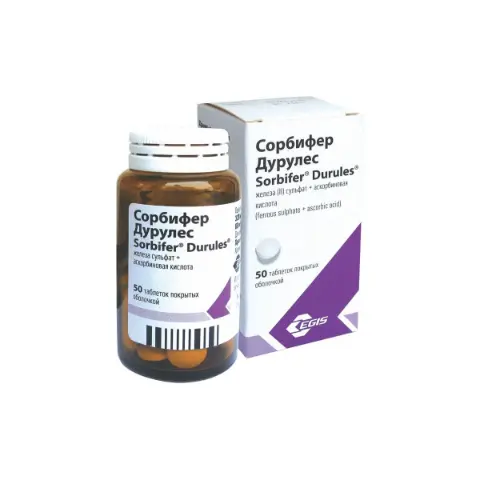
Sorbifer Durules film-coated tablets (Iron(II) sulfate / Ascorbic acid) Before taking this medicine, read this leaflet carefully and completely, as it contains important information for you. • Keep this leaflet. You may need to read it again. • If you have any questions, ask your doctor or pharmacist. • This medicine is for you only. Do not give it to others. It may harm them, even if their symptoms are the same as yours. • If you experience any side effects, or notice any side effects not listed in this leaflet, tell your doctor or pharmacist (see section 4). This leaflet contains the following information: 1. What Sorbifer Durules film-coated tablets are and what they are used for 2. What you need to know before taking Sorbifer Durules film-coated tablets 3. How to take Sorbifer Durules film-coated tablets 4. Possible side effects 5. How to store Sorbifer Durules film-coated tablets 6. Expiry date 7. Prescription status 8. Contents of the pack and other information 1. What Sorbifer Durules film-coated tablets are and what they are used for · The medicine is used to treat iron deficiency in the body. · For the prevention of iron deficiency in pregnant women and blood donors when the diet cannot provide adequate iron intake. See blog: Sorbifer Durules - A medication for the treatment of iron deficiency conditions 2. What you need to know before taking Sorbifer Durules film-coated tablets Do not take Sorbifer Durules film-coated tablets if: · you are allergic to the active substances or any of the other ingredients of this medicine, listed in section 8. · you have a disease accompanied by increased iron deposition in the body (e.g., hemochromatosis, hemosiderosis). · you have a narrowed esophagus and/or changes (narrowing) in the digestive tract. · you have received multiple blood transfusions. · you have other types of anemia that are not iron-deficiency related, except for those conditions that also develop iron deficiency. Precautions for use Before using Sorbifer Durules film-coated tablets, consult your doctor or pharmacist. This medicine is effective only for conditions accompanied by iron deficiency. Before starting treatment, iron deficiency must be confirmed. For other types of non-iron-deficiency anemia (anemia due to infection, anemia of chronic disease), prescribing this medicine is unnecessary. Inform your doctor if you have inflammatory or ulcerative diseases of the gastrointestinal tract, as treatment with oral iron preparations may exacerbate these conditions. Due to the risk of mouth ulcers and tooth discoloration, tablets should not be sucked, chewed, or held in the mouth. Tablets should be swallowed whole with water. If you cannot follow this recommendation or have difficulty swallowing, consult your doctor. If tablets accidentally enter the airways, seek medical attention immediately. This is important because if tablets enter the airways, there is a risk of developing bronchial ulcers and stenosis (narrowing), which can lead to persistent cough, bloody sputum, and/or a feeling of air hunger, even if the tablet entered the airways several days or months before these symptoms appear. Therefore, a doctor must urgently ensure that the tablet has not damaged the airways. Taking iron preparations may cause black discoloration of the stool, which has no clinical significance. Children and adolescents under 18 years of age The tablets should not be prescribed for newborns and children under 12 years of age. Other medicines and Sorbifer Durules film-coated tablets Always tell your doctor or pharmacist about all the medicines you are taking, have recently taken, or plan to take, including medicines obtained without a prescription. Sorbifer Durules must not be taken with the following medicines: • Medicines for treating infections, such as tetracycline, ofloxacin, norfloxacin, levofloxacin, ciprofloxacin, moxifloxacin, or other antibacterial drugs containing similar active substances; • Captopril (a medicine used to treat high blood pressure and heart failure); • Deferoxamine; • Zinc; • Cimetidine (a medicine for treating heartburn and stomach ulcers); • Chloramphenicol (a medicine for treating bacterial infections); • Medicines for Parkinson's disease containing levodopa or carbidopa; • Medicines for high blood pressure containing methyldopa; • Medicines containing thyroid hormones (e.g., thyroxine); • Anti-inflammatory drugs, drugs for connective tissue diseases and metabolic disorders containing penicillamine (may reduce the absorption of both these drugs and iron); • Food supplements containing calcium or magnesium carbonate, as well as antacids containing aluminum hydroxide or calcium or magnesium carbonate, form complexes with iron salts, which can reduce the absorption of both these drugs and iron; • Medicines for osteoporosis containing clodronate or risedronate (Sorbifer Durules inhibits the absorption of these medicines); Sorbifer Durules reduces the effectiveness of such medicines. If combined use of Sorbifer Durules with any of the above-mentioned medicines is still necessary, a maximum possible time interval of at least 2 hours should be maintained between taking the two medicines. Interactions related to ascorbic acid Ascorbic acid, which is part of Sorbifer Durules: • Improves the absorption of iron preparations in the intestine, as well as iron absorption from food; • Increases the concentration of salicylates in the blood (increases the risk of crystalluria); • Increases the levels of antibiotics such as benzylpenicillin and tetracycline; • Reduces the concentration of oral contraceptives (ethinylestradiol); • Acetylsalicylic acid, oral contraceptives, freshly squeezed juices, and alkaline drinks reduce the absorption and assimilation of ascorbic acid; • Increases noradrenaline activity; • Reduces the anticoagulant effect of coumarin, heparin derivatives; • Accelerates the excretion of ethyl alcohol from the body. May affect the effectiveness of disulfiram in the treatment of chronic alcoholism. Acetylsalicylic acid, oral contraceptives, freshly squeezed juices, and alkaline drinks reduce the absorption and assimilation of ascorbic acid. Consult your doctor for advice on the combined use of medications! Use of Sorbifer Durules with food and drink When taking Sorbifer Durules with tea, coffee, eggs, dairy products, bread made from coarsely ground flour, cereal flakes, or fiber-rich foods, iron absorption may be reduced. Fertility, pregnancy, and breastfeeding If you are pregnant, breastfeeding, think you may be pregnant, or are planning to become pregnant, tell your doctor or pharmacist before taking this medicine. At prescribed doses, Sorbifer Durules tablets can be used during pregnancy and breastfeeding. If you are pregnant or breastfeeding, consult your doctor before taking any medicine. Effects on ability to drive and use machines Sorbifer Durules does not affect the ability to drive or operate machinery - there is no such data. 3. How to take Sorbifer Durules film-coated tablets Take this medicine exactly as prescribed by your doctor. If you have any questions, ask your doctor. Dosage regimen Usually recommended doses: Elimination of iron deficiency: Adults and adolescents over 12 years of age: The usual recommended dose is 1 tablet twice a day (morning and evening). If side effects occur, the dose may be reduced by half (1 tablet/day). If necessary, in case of iron deficiency anemia, at the doctor's recommendation, the dose can be increased up to 3-4 tablets per day, in two divided doses (morning and evening). Prevention of iron deficiency during pregnancy: For the first 6 months of pregnancy, the recommended dose is 1 tablet once a day. In the last three months of pregnancy and during breastfeeding - 1 tablet twice a day. The duration of treatment is determined individually based on repeated laboratory blood tests. Children and adolescents under 12 years of age The tablets should not be prescribed for newborns and children under 12 years of age. Method of administration Tablets are for oral use. The tablet must not be broken, chewed, sucked, or held in the mouth. The tablet should be swallowed whole with water. Tablets should be taken before or during meals, taking into account individual tolerance. The tablet should not be given to a patient in a lying position. The tablets should not be prescribed for newborns and children under 12 years of age. If you take more Sorbifer Durules tablets than you were prescribed, seek medical attention immediately or go to the nearest hospital emergency department. Overdose is particularly dangerous in children. If you forget to take a Sorbifer Durules tablet Do not take a double dose to make up for missed doses. If you stop taking Sorbifer Durules tablets prematurely Do not stop taking the tablets after normalizing iron levels in the blood without consulting your doctor. Treatment to replenish iron stores in the body should continue as prescribed by your doctor (approximately 2 months). If iron deficiency was accompanied by clinical symptoms, the average duration of treatment is 3-6 months. If you have any further questions about the use of this medicine, ask your doctor or pharmacist. 4. Possible side effects Like all medicines, this medicine may cause side effects, although not everybody gets them. If any of the following events occur, consult your doctor: Frequent (occurs in 1 to 10 out of 100 patients): - Nausea, - Abdominal pain, - Diarrhea, - Constipation. Rare (occurs in 1 to 10 out of 10,000 patients): - Ulcerative changes in the esophagus, - Esophageal stenosis. Frequency unknown: - Hypersensitivity reactions, such as: - Skin rash. - Severe allergic reaction (anaphylactic reaction), accompanied by difficulty breathing or dizziness. Seek medical attention immediately! - Severe allergic reaction (angioedema), accompanied by swelling of the face or larynx, which may cause difficulty breathing or swallowing. Seek medical attention immediately! - Mouth ulcers (if used improperly, sucking, chewing, or holding tablets in the mouth may cause mouth ulcers). - Vomiting. - In any patient, especially the elderly and patients with swallowing difficulties, there is a risk of ulcers in the throat, esophagus, or bronchi (if the tablet enters the airways). If the tablet enters the airways, there is a risk of developing ulcers in the bronchi, which can lead to their narrowing. Reporting of side effects If you experience any side effects, consult your doctor. This recommendation applies to all possible side effects, including side effects not listed in this leaflet. You can also report side effects to the drug side effect information database, including reports of drug ineffectiveness. By reporting side effects, you will help provide more information about the safety of this medicine. 5. How to store Sorbifer Durules film-coated tablets Store at a temperature not exceeding 25°C. Keep the medicine out of the reach of children! Do not take Sorbifer Durules tablets if there are obvious signs of deterioration in quality (e.g., change in color). 6. Expiry date The expiry date is indicated on the packaging. Do not use the medicine after the expiry date indicated on the packaging. The expiry date is the last day of the month indicated. Do not dispose of medicines in household waste or sewage. If you need to dispose of medicines that are no longer needed, consult your pharmacist. These measures will help prevent environmental pollution. 7. Prescription status Pharmaceutical product group - III, available without a prescription 8. Contents of the pack and other information What Sorbifer Durules film-coated tablets contain Active substance: Each tablet contains 320 mg of Iron(II) sulfate (equivalent to 100 mg Fe(II)). Each tablet contains 60 mg of Ascorbic acid. Excipients: Tablet core: Povidone, Polyethylene powder, Carbomer 934 P, Magnesium stearate. Coating: Hypromellose, Paraffin hard, Macrogol 6000, Titanium dioxide, Iron oxide yellow. Appearance and contents of the pack of Sorbifer Durules film-coated tablets Appearance: Ovoid, slightly biconvex, film-coated tablets of dull yellow-yellow color, engraved with "Z" on one side, with a characteristic odor. Packaging 50 or 30 tablets are packed in brown glass bottles with a polyethylene cap. One bottle with instructions for medical use is packed in a cardboard box.